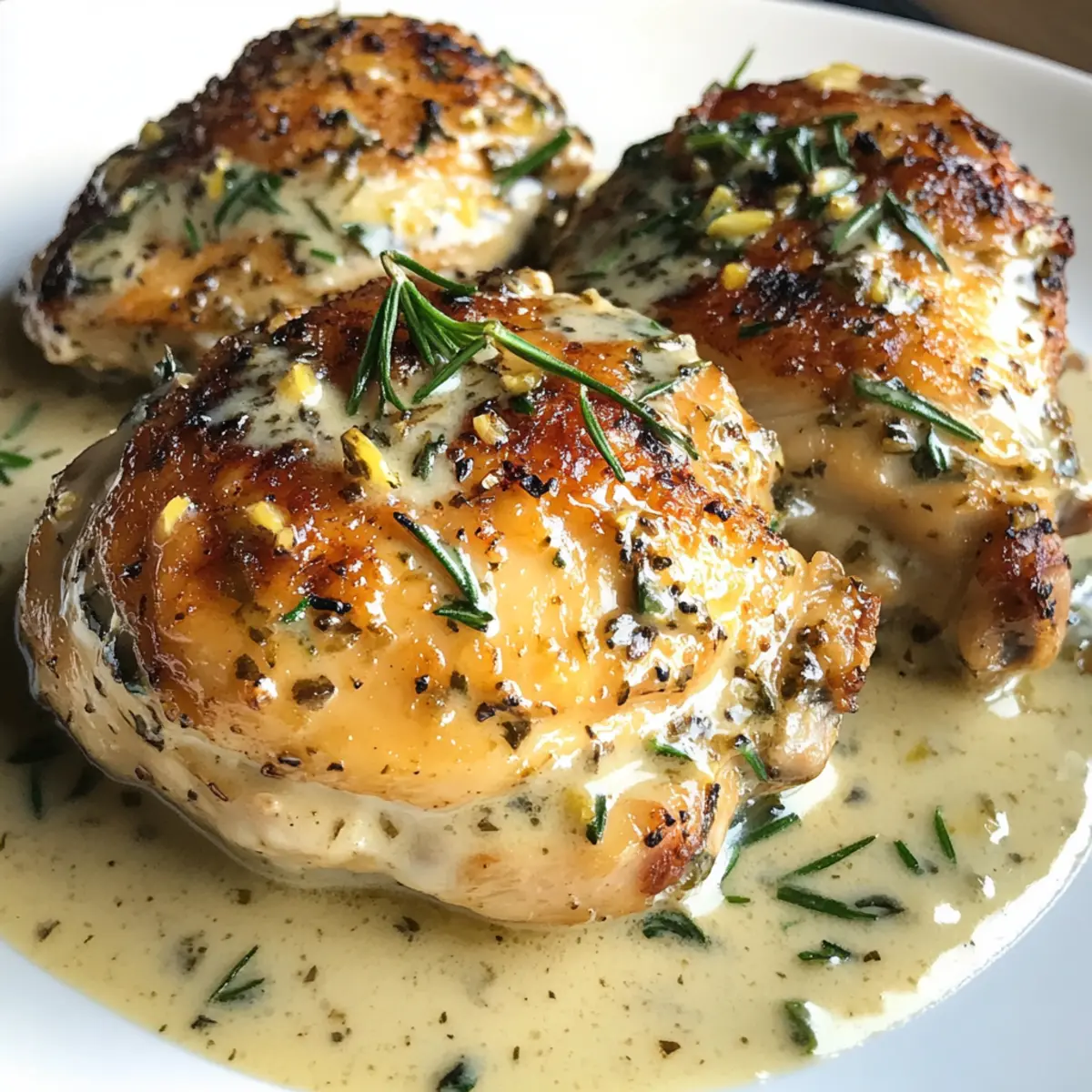
Ingredients
Equipment
Method
Step-by-Step Instructions for Creamy Tarragon Chicken
- Prep Chicken: Begin by patting the bone-in, skin-on chicken thighs dry, ensuring they’re moisture-free for optimal crispiness. Generously season both sides with kosher salt and black pepper. Place the seasoned chicken on a plate and refrigerate uncovered for 4-8 hours, allowing the flavors to penetrate the meat while keeping the skin dry.
- Preheat Oven: While the chicken is chilling, preheat your oven to 350°F (175°C).
- Sear Chicken: Heat a large braiser or skillet over medium heat and drizzle in olive oil. Once the oil shimmers, carefully place the chicken thighs skin-side down. Sear for 7-8 minutes until the skin is golden brown and crispy, then flip them over and cook for another 2 minutes. Remove the chicken and drain excess fat from the braiser.
- Sauté Aromatics: In the same braiser, add unsalted butter, thinly sliced shallots, and minced garlic. Sauté for 3-4 minutes, stirring frequently, until the shallots are soft and starting to brown.
- Build Sauce: Sprinkle in the all-purpose flour and cook for 2-3 minutes, stirring constantly. Gradually pour in the white wine, scraping any browned bits from the pan for added flavor. Next, add chicken stock, heavy cream, Dijon mustard, and lemon zest. Stir continuously until the sauce simmers and thickens slightly.
- Braise Chicken: Return the seared chicken to the braiser, placing it skin-side up in the creamy sauce. Cover the braiser with a lid or foil and transfer it to the preheated oven. Bake for 30 minutes, then remove the lid and continue cooking for another 30 minutes. Ensure the internal temperature reaches 165°F (75°C).
- Finish: Once the chicken is fully cooked, take the braiser out of the oven. Squeeze fresh lemon juice over the chicken and garnish with chopped tarragon leaves for a burst of flavor.
Nutrition
Notes
Store leftover Creamy Tarragon Chicken in an airtight container for up to 3-4 days. Reheat gently on the stovetop over low heat. Freezing is not recommended due to the risk of dairy separation.