
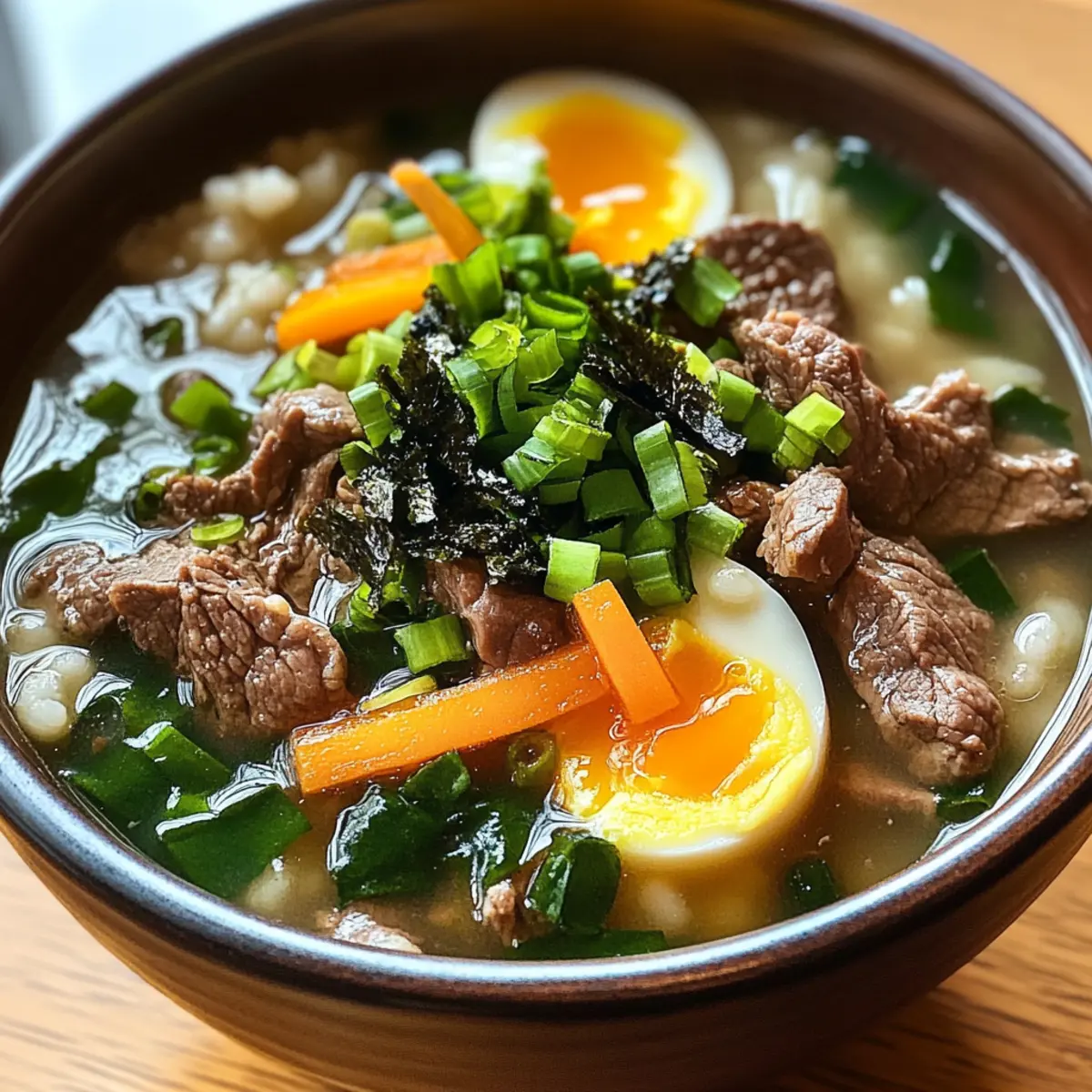
As I gathered around the table with loved ones on a chilly evening, the comforting aroma of Korean rice cake soup, known as Tteokguk, wafted through the air, instantly brightening the room. This heartwarming dish is more than just a meal; it’s a culinary hug that combines tender beef and chewy rice cakes in a savory broth that’s sure to warm your soul. What I adore about Tteokguk is its incredible versatility—whether you’re a carnivore or prefer a vegetarian twist, this soup can effortlessly be customized to suit your taste buds. Plus, it’s a make-ahead marvel! You can prepare it in batches and freeze the extra portions for those busy weeknights when cooking feels like a mini crisis. Are you ready to dive into the delightful world of Korean cuisine? Let’s get cooking!
Why is Tteokguk a must-try?
Comforting warmth: Imagine savoring a bowl filled with tender beef and chewy rice cakes—it’s like a cozy hug on a cold day!
Customizable goodness: Whether you stick to the classic version or opt for a vegetarian twist with mushrooms or tofu, Tteokguk allows you to tailor it to your taste.
Make-ahead magic: Perfect for busy lifestyles, this soup can be made in advance and frozen, ready to warm up when needed.
Nutrient-packed delight: Each bowl offers essential vitamins and minerals, enhancing your meal with healthful benefits.
Crowd-pleaser: Serve it up at gatherings or weeknight dinners, and watch it disappear—everyone loves this hearty dish!
For an authentic side, pair it with something like kimchi to enhance the experience. Get ready for a culinary journey you’ll cherish!
Korean Rice Cake Soup Ingredients
For the Broth
• Water – A clean base for the broth; filtered water is recommended for the best taste.
• Beef Brisket (8 oz) – Adds rich flavor and protein; for a vegetarian version, consider substituting with tofu or mushrooms.
• Garlic (4 cloves, whole) – Infuses the broth with aromatic depth and character.
• Green Onions (3, both parts) – Brightens the broth with flavor and color.
• Korean Soup Soy Sauce (1.5 tbsp) – Essential for umami and seasoning; can be swapped for regular soy sauce if necessary.
• Sesame Oil (1 tbsp) – Enhances richness and adds an inviting aroma.
• Salt and Black Pepper – Basic seasonings to elevate the taste as needed.
For the Rice Cakes and Toppings
• Sliced Rice Cakes (21 oz, ~4 cups) – The star ingredient; soak beforehand to achieve that perfect chewy texture.
• Gim (2 sheets, toasted) – Adds a delightful crunch when garnishing your soup.
• Eggs (3, separated) – Provides a lovely garnish texture, making your dish visually appealing.
Now, gather these ingredients, and you’re ready to create a bowl of warm, comforting Korean Rice Cake Soup that will surely bring joy to your table!
Step‑by‑Step Instructions for Korean Rice Cake Soup
Step 1: Rinse and Prepare the Beef
Start by rinsing the beef brisket cubes under cold water to remove any impurities; drain well and set aside for later use in the Korean rice cake soup. This initial step ensures a cleaner broth, enhancing the overall flavor profile of your dish.
Step 2: Create the Broth
In a large pot, combine 8 cups of filtered water, the rinsed beef, whole garlic cloves, and both parts of the chopped green onions. Bring this mixture to a vigorous boil over medium-high heat. Once boiling, reduce the heat to low, cover, and let it simmer for 1 to 1.5 hours until the beef is tender, occasionally skimming the foam that rises to the surface for a clearer broth.
Step 3: Soak the Rice Cakes
While the broth is simmering, soak your sliced rice cakes in cold water for about 30 minutes. This crucial step allows the rice cakes to soften and achieve that perfect chewy consistency, ready to enhance your Korean rice cake soup. After soaking, drain the rice cakes and put them aside.
Step 4: Toast the Gim
In a dry skillet over medium heat, toast the sheets of gim for about 1-2 minutes until crispy and fragrant. Keep an eye on them to prevent burning. Once toasted, crumble or slice them into small pieces for garnish. This step adds a delightful crunch and flavor contrast to your soup.
Step 5: Prepare the Eggs
Heat a non-stick skillet over medium heat and lightly grease it. Separate the eggs, then pour the yolks into the skillet. Cook until just set and lightly golden, about 1-2 minutes, then slice into strips. Repeat the process with the egg whites. These colorful strips will add texture and elegance to your Korean rice cake soup.
Step 6: Strain the Broth
After the beef is tender, strain the broth back into the pot to remove the solid garlic cloves and green onions. Take the tender beef out, shred it using forks, and set aside; discard the strained vegetables. This step leaves you with a beautifully clear broth ready to be seasoned.
Step 7: Season the Broth
Add the Korean soup soy sauce and sesame oil to the strained broth, then season with salt and black pepper to taste. Bring the mixture to a gentle boil over medium heat. As the broth simmers, the flavors will meld beautifully, preparing a savory base for the rice cakes.
Step 8: Cook the Rice Cakes
Now, add the soaked rice cakes to the boiling broth and cook for about 5 to 8 minutes, stirring gently until they become tender yet chewy. You’ll know they’re done when they float and have a nice, soft texture, perfect for your Korean rice cake soup.
Step 9: Serve the Soup
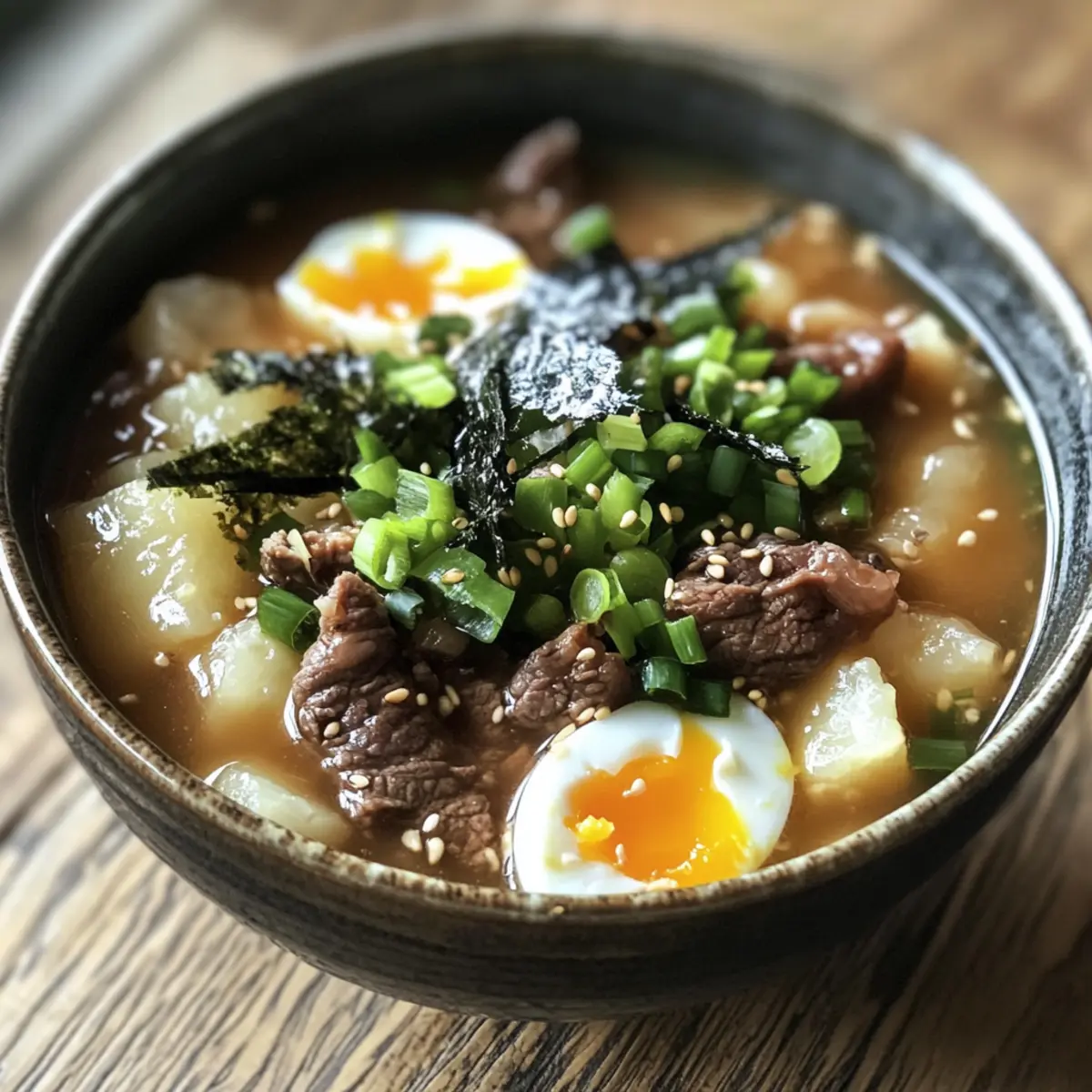
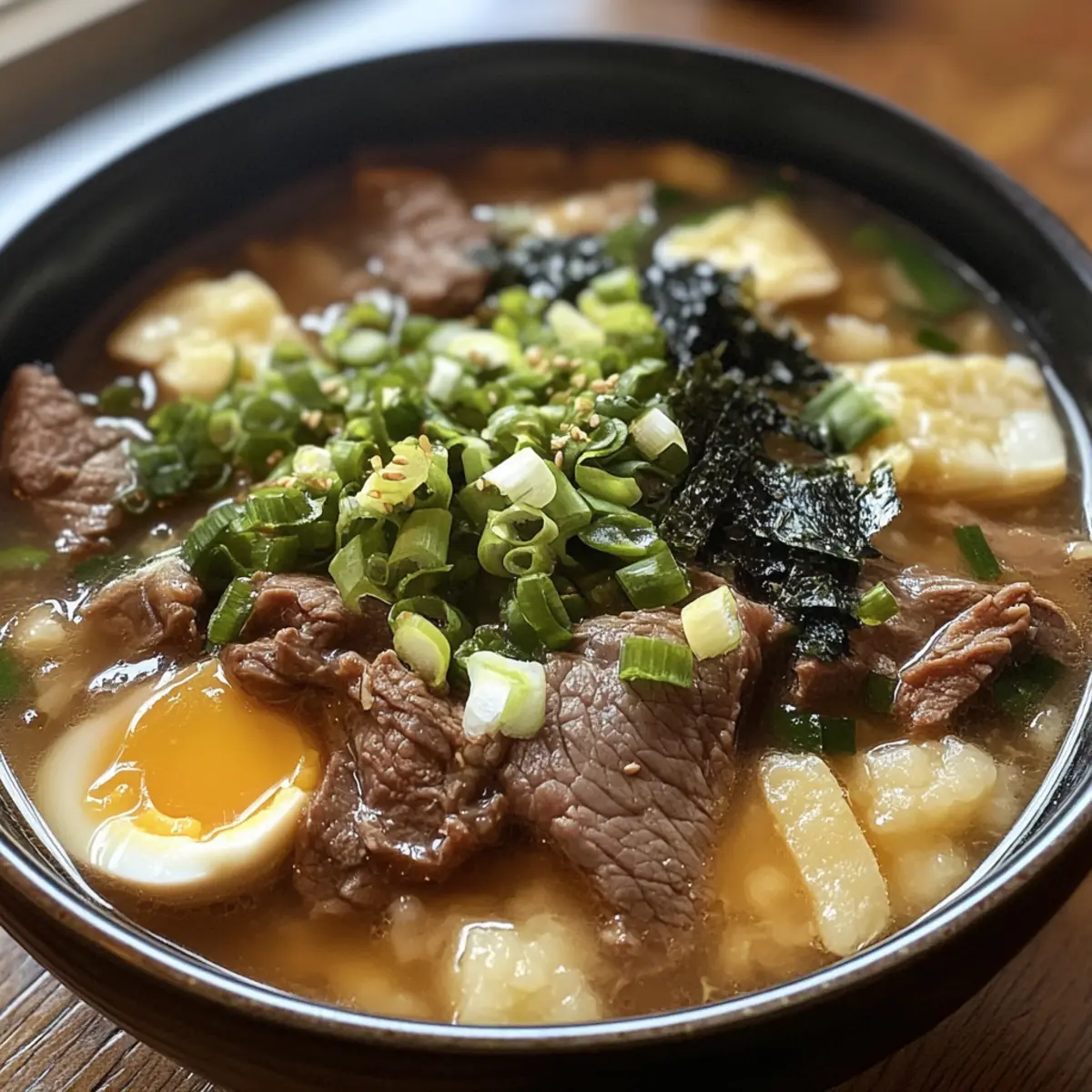
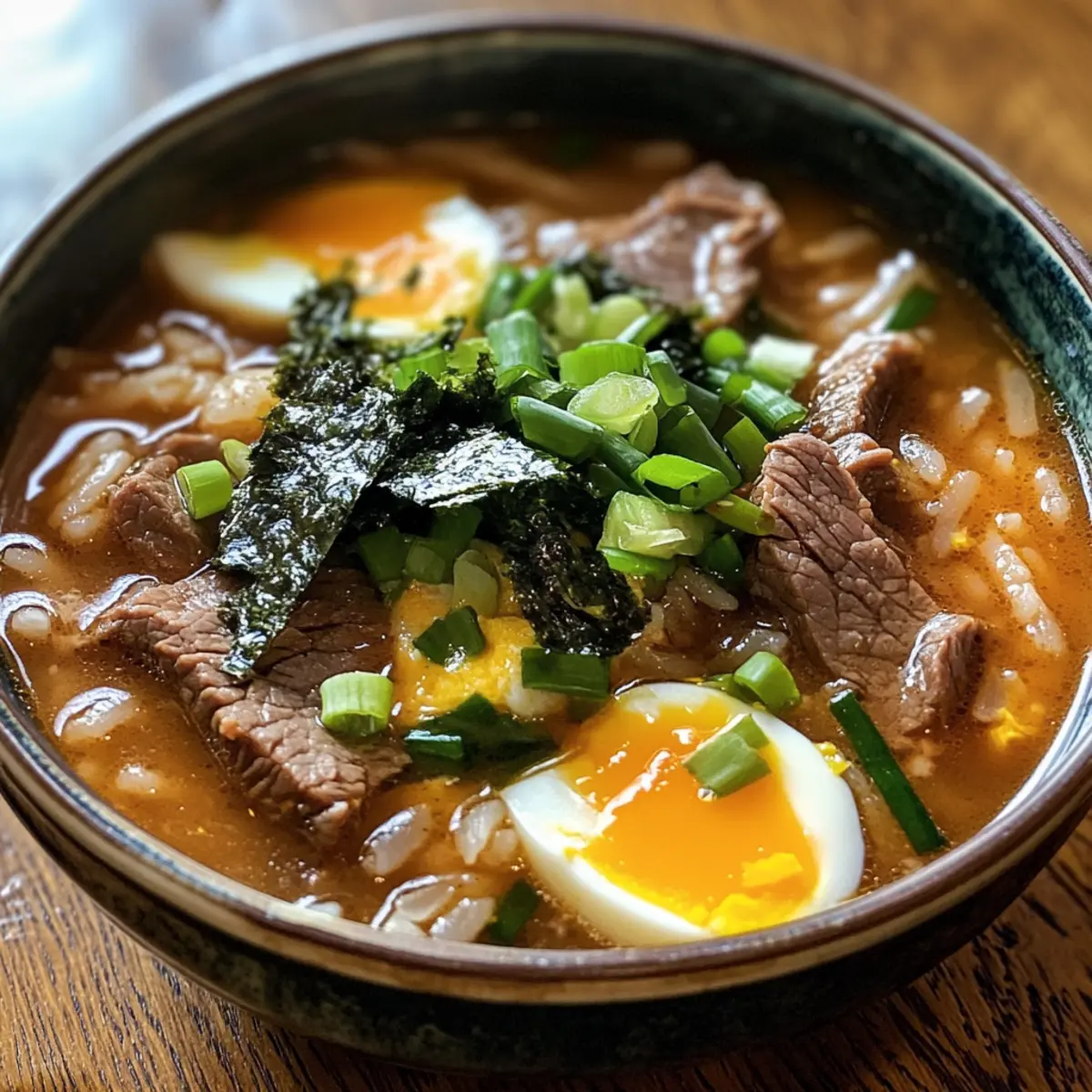
To serve your comforting Korean rice cake soup, ladle the hot broth and rice cakes into bowls. Top each serving with the shredded beef, egg strips, crumbled gim, and any remaining chopped green onions. This final touch enhances both appearance and flavor, inviting everyone to dig in!
Korean Rice Cake Soup Variations
Feel free to explore and customize this cozy soup to delight your taste buds even more!
-
Vegetarian Delight: Substitute beef with mushrooms or tofu for a hearty and satisfying vegetarian option that still delivers incredible flavor.
-
Veggie Boost: Add vibrant vegetables like bok choy or carrots to enhance the nutrition and visual appeal of your soup. A colorful mix not only tastes great but also makes your dish beautiful to present.
-
Spicy Kick: For those who love a little heat, toss in some sliced jalapeños or a dash of gochujang to elevate the spice level. Just remember, a little goes a long way!
-
Umami Explosion: Boost the broth’s depth by incorporating extra garlic or using dark soy sauce for a more complex flavor profile. You’ll be amazed at how these small tweaks make a big difference!
-
Noodle Upgrade: Add some cooked noodles to the soup for a delightful twist on texture. This way, each spoonful offers a mix of chewy rice cakes and slurpy noodles.
-
Herb Infusion: Consider tossing in fresh herbs like cilantro or Thai basil just before serving for a light, fragrant finish that brightens the broth beautifully.
-
Garnish Galore: Experiment with toppings like chopped peanuts or crispy onion flakes to provide a delightful crunch that contrasts with the soup’s rich textures.
-
Miso Magic: Stir in a spoonful of miso paste into your broth for added richness and a subtle tang that surprises and delights every time.
For more delightful recipes using similar ingredients, consider checking out Korean Potato Salad or even a comforting bowl of Steak Potato Soup. The possibilities are endless when you let your creativity shine!
Expert Tips for Korean Rice Cake Soup
• Perfect Simmering: Ensure beef is tender by simmering long enough, checking for foam and skimming for clarity.
• Soak Wisely: Don’t skip soaking the rice cakes! This step is vital for achieving that perfect chewy texture in your Korean rice cake soup.
• Season Gradually: Adjust your seasoning incrementally; always taste the broth before serving to find the perfect balance of flavors.
• Serve Fresh: For the best experience, serve your soup immediately after cooking, as flavors meld beautifully when fresh.
• Storage Savvy: If making ahead, refrigerate the broth separately from the cooked rice cakes to maintain texture, storing leftovers in an airtight container for up to three days.
What to Serve with Comforting Korean Rice Cake Soup?
As you savor a bowl of Tteokguk, consider these delightful pairings that enhance the meal and create a memorable dining experience.
- Kimchi: A classic accompaniment, kimchi adds a spicy, tangy kick that perfectly contrasts the rich broth of your soup.
- Pickled Radish: The crunch and zest of pickled radish provide a refreshing balance, elevating the overall flavor experience with each spoonful.
- Scallion Pancakes: These crispy, savory pancakes are a wonderful textural addition; their soft centers and crunchy edges complement the chewy rice cakes beautifully.
- Savory Banchan (Small Side Dishes): Including a variety of banchan, like sautéed spinach or marinated vegetables, adds depth and variety to the meal while offering a taste of traditional Korean cuisine.
- Hot Tea: A light herbal tea or traditional Korean barley tea serves as a soothing drink, cleansing the palate while harmonizing with the heartiness of the soup.
- Sweet Red Bean Soup: For dessert, consider a warm sweet red bean soup; its mild sweetness rounds out the meal and contrasts the savory elements beautifully.
These thoughtfully chosen sides not only enhance the flavors of Tteokguk but also cultivate a vibrant and authentic dining experience!
How to Store and Freeze Korean Rice Cake Soup
Fridge: Keep leftover Tteokguk in an airtight container for up to 3 days; the flavors will continue to develop, making it even more delicious.
Freezer: For longer storage, freeze the soup for up to 2 months. Make sure to separate the broth and rice cakes before freezing to maintain texture.
Reheating: Thaw in the fridge overnight and reheat on the stove over low heat, adding a splash of water if necessary to restore the broth’s consistency.
Make-Ahead: Prepare the broth and beef in advance, then refrigerate for up to 24 hours. Soak rice cakes ahead of time and keep them in water in the fridge for optimal freshness.
Make Ahead Options
Preparing your Korean Rice Cake Soup (Tteokguk) in advance is a fantastic way to save time and ease the stress of meal planning! You can create the broth and cook the beef up to 24 hours in advance, allowing the flavors to deepen. Simply refrigerate the strained broth and shredded beef in airtight containers. Additionally, the sliced rice cakes can be soaked in water and stored in the fridge for up to 3 days—just drain before use to prevent them from becoming mushy. When you’re ready to serve, reheat the broth, add in the soaked rice cakes for about 5-8 minutes, and then top with your savory beef, egg strips, and gim. Enjoy restaurant-quality comfort at home with minimal effort!
Korean Rice Cake Soup (Tteokguk) Recipe FAQs
How do I select the best beef for my broth?
Absolutely! For the richest flavor, choose well-marbled beef brisket. Look for beef with a bright red color and minimal dark spots. A good cut will enhance your Korean rice cake soup significantly. If you’re opting for a vegetarian version, firm tofu or shiitake mushrooms can provide a satisfying texture and flavor.
What’s the best way to store leftover Tteokguk?
You can refrigerate the soup in an airtight container for up to 3 days. The taste often improves as the flavors meld together! If you’re making it ahead, store the broth separately from the rice cakes to keep the texture intact. The rice cakes can become too soft if left in the broth for too long.
Can I freeze Tteokguk for later use?
Yes! For freezing, separate the broth and rice cakes before placing them in airtight freezer bags or containers, ensuring they’re kept in small portions. The soup can be frozen for up to 2 months. When you’re ready to enjoy, thaw it in the fridge overnight, then gently reheat on the stove, adding a splash of water if needed.
What if I don’t have Korean soup soy sauce?
Very! If you can’t find Korean soup soy sauce, regular soy sauce will work in a pinch, though it may alter the flavor slightly. Start with a little and adjust to your taste. Additionally, consider adding a pinch of sugar or a drop of sesame oil to maintain that umami flavor.
How do I prevent the rice cakes from becoming too mushy?
To enjoy the perfect texture, make sure to soak the rice cakes for the recommended time and cook them just until they’re tender—about 5-8 minutes in the broth. Overcooking will lead to a mushy consistency! If you find they are too soft after cooking, serve the soup immediately to enjoy the remaining firmness.
Are there any dietary considerations for making Tteokguk?
Definitely! If you’re preparing the soup for someone with dietary restrictions, note that it contains gluten from soy sauce (both the Korean and regular types) and eggs. For a vegan version, simply skip the eggs and use plant-based ingredients like tofu and nutritional yeast for added flavor. Always check ingredient labels to ensure they meet any allergy considerations, especially when accommodating guests!
Warm Up with Cozy Korean Rice Cake Soup for Any Day
Ingredients
Equipment
Method
- Rinse the beef brisket cubes under cold water to remove impurities; drain well and set aside.
- In a large pot, combine 8 cups of filtered water, the rinsed beef, whole garlic cloves, and both parts of the chopped green onions. Bring to a vigorous boil over medium-high heat. Once boiling, reduce to low, cover, and let simmer for 1 to 1.5 hours.
- Soak the sliced rice cakes in cold water for about 30 minutes. After soaking, drain the rice cakes and set aside.
- Toast the sheets of gim in a dry skillet over medium heat for 1-2 minutes until crispy. Crumble or slice them into small pieces for garnish.
- Heat a non-stick skillet over medium heat. Separate the eggs, pour the yolks into the skillet and cook until just set. Slice into strips and repeat with the egg whites.
- After the beef is tender, strain the broth back into the pot. Shred the beef and set aside, discarding the strained vegetables.
- Add the Korean soup soy sauce and sesame oil to the strained broth; season with salt and black pepper to taste. Bring to a gentle boil.
- Add the soaked rice cakes to the boiling broth and cook for 5 to 8 minutes, stirring gently until they become tender and chewy.
- Ladle the hot broth and rice cakes into bowls, topping with shredded beef, egg strips, crumbled gim, and any remaining chopped green onions.
Leave a Reply